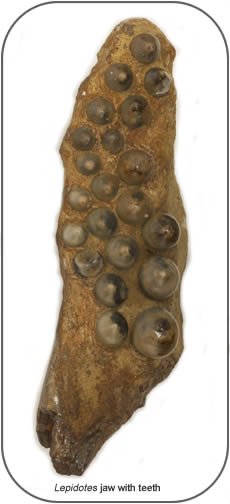
关于蟾蜍石的记载很多,最早可以溯及到罗马作家老普利尼(Pliny the Elder)(九绿注:老普利尼,A.D.23-79,古罗马作家、博物学家、百科全书编纂者),他死于公元79年的维苏威火山爆发摧毁庞贝城时。事实上,蟾蜍石这个名称起源于普利尼所命名的『Batrachites』,意思是『青蛙石』(兰基思特(Lankester),1920)。
兰基思特解释:它们之所以如此被命名,主要是因为那淡褐色的色彩让人联想起蟾蜍所致。而随后中世纪的医生们也该为此负责,因为他们活灵活现的想象有关蟾蜍的起源及神秘力量。
博物学家罗伯特.布鲁克(Robert Brookes,1973)描述了蟾蜍石的色彩和外型,甚至提及:「……它或许是鱼的牙齿,但这和它的外型幷不很一致。」
蟾蜍石在莎士比亚的《皆大欢喜》(As You Like It)这出戏剧里曾被提及:
在第二幕第一段中,老公爵说(Duke Senior):
「逆运也有它的好处,
就像丑陋而有毒的蟾蜍,
它的头上却顶着一颗珍贵的宝石。」
======================原文如下======================
Toadstone ring
A magical talismanic ring set with a toadstone was believed to protect the wearer from harm, especially poison. Not a stone from the head of a toad at all but the palatal tooth of a fossilised fish, a ray. Post medieval.
-----------------------------------------------------------------------------------------
Toadstone myths
Much has been written about toadstones. They are mentioned in literature as far back as the Roman writer Pliny the Elder, who died in the famous AD 79 eruption of Mount Vesuvius, which destroyed Pompeii. In fact, it has been suggested that the legends about toadstones originated with the name 'Batrachites' (frogstone) given to them by Pliny (Lankester 1920).
Lankester stated that they were so-named because the drab colour resembled that of a toad. Subsequently the vivid imaginations of medieval physicians may have been responsible for myths about the origin and mystical powers of toadstones.
The naturalist Robert Brookes (1763, p. 162) described the colour and shape of toadstones, even remarking that: '...and some suppose it to be the tooth of a fish; but this does not seem to agree with its shape'.
Toadstones were alluded to in William Shakespeare's play As You Like It .
In Act 2, Scene 1, Duke Senior says:
'Sweet the uses of adversity
Which, like the toad, ugly and venomous,
Wears yet a precious jewel in his head'
它们从不曾和拥有者们永远长相厮守。
有朝一日,拥有者会赫然发现链子或皮绳断掉,而女巫石就此离开他的生命之中……… |


 发表于 2007-2-25 16:02:35